
The Supreme Court has stayed the reinstatement of IAS officer Rinku Dhugga, who was compulsorily retired by the Centre following a controversy involving the Thyagaraj Stadium. The Centre challenged the Delhi High Court's decision to set aside her compulsory retirement, which was initially ordered after allegations of misusing the stadium for dog walking and unauthorised absence.
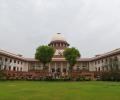
The Supreme Court clarified on Monday that it had not adjudicated on the new Form 6, used for inclusion in electoral rolls, during its hearing on the Special Intensive Revision (SIR) of electoral rolls in Bihar. This clarification comes after the Election Commission's press release suggested the apex court had upheld the Form 6 declaration.
The Supreme Court has agreed to examine a plea seeking the recall of its recent split verdict regarding the 2023 law on the appointment of the Chief Election Commissioner and Election Commissioners. This law notably excludes the Chief Justice of India from the selection panel, a change from a previous Supreme Court directive.
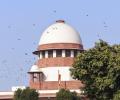
The Supreme Court ruled that a confession statement cannot be the sole basis for detaining an individual under the National Security Act, quashing the preventive detention of Mulla Afroz and imposing a fine on the government for an illegal order.

Kerala Chief Minister V D Satheesan announced that his government will comply with the High Court's directive to register an FIR against former Chief Minister Pinarayi Vijayan, his daughter Veena T, and son-in-law P A Mohamed Riyas in the alleged CMRL bribery case. Satheesan stated there would be no appeal against the verdict. The High Court deemed the government's earlier decision to form an SIT without an FIR illegal and ordered immediate registration of a case based on ED's information.

The Supreme Court has directed the Delhi High Court to reconsider a plea by 11 members of the Delhi Gymkhana Club challenging the Centre's decision to take over 27.3 acres of land leased to the club and subsequent eviction proceedings. The members argue that the government-nominated management cannot effectively challenge the Centre's actions, which they deem a "colourable exercise" of power and a violation of fundamental rights.

We must heed what the CJI has said. Challenging every judgment of the central government is inviting chaos, asserts Shreekant Sambrani.

Supreme Court Justice Ujjal Bhuyan has unequivocally stated that any process disenfranchising Indian citizens is arbitrary and violates the Constitution.
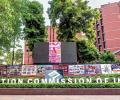
The Election Commission has clarified that its ECINet platform is decentralised, with statutory functions performed only by designated officials, not headquarters staff. This comes after concerns were raised about the centralisation of electoral roll databases. The EC also defended the legality of an additional declaration sought from new voters during the Special Intensive Revision, citing unanimous commission approval and a Supreme Court judgment.

The Supreme Court has upheld the Bombay High Court's decision to quash the Yes Bank administrator's write-off of Rs 8,415 crore worth of Additional Tier 1 (AT-1) bonds, criticising the RBI and Yes Bank's conduct.
The Supreme Court has granted the Centre a final opportunity to present measures taken to prevent the circulation of child sexual exploitation and abuse material on social media platforms, following a petition highlighting inconsistent compliance by intermediaries.

The Supreme Court is examining the Election Commission's decision to allot the Shiv Sena's bow-and-arrow symbol to the Eknath Shinde faction. The court questioned the validity of relying primarily on legislative strength, particularly when MLAs face disqualification. Arguments from the Shinde faction defended the EC's test, while the court raised concerns about the "sentiment of the symbol" for defectors and the practicalities of assessing grassroots support. The hearing remains inconclusive.

Former Supreme Court judge Sanjay Kishan Kaul has criticised former Chief Justice of India D Y Chandrachud's approach to judicial appointments, alleging that he was "too deferential to the government". Kaul, in his forthcoming memoir, details instances where Chandrachud sought government "pre-approval" for appointments, raising concerns about judicial independence and executive pressure.

Shiv Sena corporator Ramesh Mhatre and three others have surrendered to a Thane trial court after the Supreme Court cancelled their bail in a doctor assault case. The Supreme Court overturned a Bombay High Court order, emphasizing the importance of doctor safety and noting Mhatre's extensive criminal history.
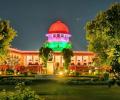
The Supreme Court has dismissed a Public Interest Litigation challenging the constitutional validity of the 2018 amendment to the Scheduled Castes and Scheduled Tribes (Prevention of Atrocities) Act. The amendment had restored restrictions on anticipatory bail and removed requirements for preliminary inquiry and prior approval before arrest. The court cited its 2020 verdict which had already upheld these amended provisions, rejecting arguments about potential misuse and "reverse discrimination."

The Supreme Court stated it would not engage in an academic exercise regarding the interpretation of legislative privileges for MLAs and their impact on freedom of speech, as the Tamil Nadu Assembly's impugned resolution from 2003, which sparked the case, was withdrawn in 2004. The court will consider the withdrawal before a seven-judge bench.

Former Supreme Court judge Justice Rohinton Fali Nariman has voiced serious concerns regarding the Election Commission's functioning, stating that the right to vote is 'at great peril'. He called for the Supreme Court's intervention to address 'disturbing developments' within the poll panel, particularly citing issues like voter disenfranchisement during electoral roll revisions and the controversial appointment process of Election Commissioners.

The Delhi High Court has mandated a six-month forensic audit into the alleged dissipation of assets by former Fortis promoters Malvinder Mohan Singh and Shivinder Mohan Singh, stemming from enforcement proceedings by Japanese drug major Daiichi Sankyo.

The Gauhati court ruled that Rajive Mohan Pant did not meet the minimum experience requirement and ordered a fresh selection process within four months.
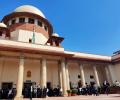
The Supreme Court has agreed to constitute a special bench to address the Centre's plea regarding the applicability of its March 11 judgment on OBC creamy-layer criteria to candidates of the Civil Services Examination (CSE) 2025. The Department of Personnel and Training (DoPT) seeks to proceed with service allocation for 958 recommended candidates based on the creamy-layer determination applied before the verdict, citing potential unequal treatment and disruption to training schedules.

A US appeals court has upheld a $562.5 million arbitral award, which has grown to over $2 billion with interest, in favour of Devas Multimedia against Antrix Corporation, the commercial arm of ISRO, ruling that US courts have jurisdiction despite Antrix being government-owned.

Former Tehelka editor Tarun Tejpal has been convicted by the Bombay High Court's Goa bench in a 2013 rape case and sentenced to 10 years' rigorous imprisonment, overturning his 2021 acquittal. Tejpal claims he is a "political victim" and will challenge the verdict in the Supreme Court, alleging his journalistic career has been targeted.
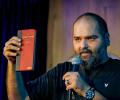
Stand-up comedian Kunal Kamra has moved the Supreme Court to intervene in a significant case concerning the interpretation of legislative privileges of MLAs and their impact on freedom of speech. A seven-judge Constitution bench will hear the matter from October 6. Kamra's involvement stems from privilege proceedings against him in the Maharashtra Assembly over his comedy special. The case also revisits a 2003 matter involving journalist N Ravi, highlighting conflicting views on whether fundamental rights override legislative privileges.

'Nobody expected it to become a landmark judgment.' 'Because the Supreme Court has expanded the definition of family and included single parents, same sex parents, etc, the scope of looking at families has enhanced.'
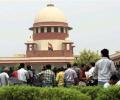
A curative petition has been filed in the Supreme Court challenging the September 23 split verdict on the Chief Election Commissioner and Other Election Commissioners (Appointment, Conditions of Service and Term of Office) Act, 2023. The petition, filed by Jaya Thakur, alleges a "reasonable apprehension of bias" due to claims that Justice Satish Chandra Sharma's son is a standing counsel for the Election Commission, raising questions about judicial propriety.

The Supreme Court has stayed an Allahabad High Court order that directed Gautam Buddh Nagar District Magistrate Medha Roopam to pay Rs 5 lakh compensation from her salary for the detention of student Akriti Chaudhary under the National Security Act (NSA). The High Court had quashed Chaudhary's detention, criticising the DM's conduct and ordering compensation. The Supreme Court issued notice on pleas from Roopam and the Uttar Pradesh government, also staying the High Court's observations against the DM, with further hearing scheduled for October 7.

The Supreme Court has stayed a Madras High Court order that had quashed the Tamil Nadu government's decision to provide government jobs to relatives of those who died in a stampede at Karur last year, questioning the locus standi of petitioners challenging government policy.
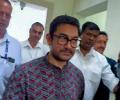
Lawyers flooded the courtroom of Chief Justice of India D Y Chandrachud to witness the proceedings as one special guest -- Aamir Khan -- was seated in the front row.

The Supreme Court of India has issued a strong warning against the use of "non-existent, fake, and hallucinated" judgements generated by artificial intelligence (AI), likening it to "the release of methyl Isocyanate in the province of law and justice: invisible, insidious, and catastrophic." The court set aside an NCLT verdict that relied on such AI-generated precedents.

The Allahabad High Court's Lucknow bench ordered the immediate release of a minor, criticising the police and a judicial magistrate for illegally detaining him without verifying his age and failing to follow Supreme Court guidelines on juvenile justice. The court has sought affidavits from the officials involved.
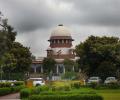
The Supreme Court has ruled that an investigating agency must seek a magistrate's approval for re-arresting an individual if they were previously released due to a breach of constitutional rights, such as not being informed of arrest grounds or being detained beyond 24 hours. This judgment reinforces the importance of Articles 22(1) and 22(2) and introduces stricter accountability measures for police officers.
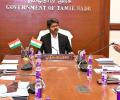
The Tamil Nadu government has appealed to the Supreme Court against a Madras High Court judgment. The High Court ruled that individuals converting to Islam cannot claim reservation under the Backward Class (Muslim) category solely based on conversion, striking down a state Government Order that allowed such benefits.

Former Supreme Court Justice Abhay Oka warned that major cities might be forced to adopt mandatory face mask usage within 20-25 years due to environmental degradation. He stressed that protecting the environment is a fundamental constitutional duty, countering the misconception that humans own the Earth. Justice Oka also encouraged students to study law and use AI responsibly.

Reversing the burden of evidence means that the principle of innocent until proven guilty does not apply. It is exactly the opposite: Guilty as charged, until you can convince the judges of the contrary, points out Shekhar Gupta.

Three individuals accused of firing at actor Tiger Shroff's car have been remanded to police custody until October 31. Investigators suspect the attack was orchestrated by Lawrence Bishnoi gang member Anil Pandit, prompting a deeper probe into the gang's involvement. Police are seeking to recover weapons and unearth the full conspiracy.

The Bombay High Court has convicted former Tehelka editor Tarun Tejpal for the sexual assault of a junior colleague in 2013, overturning his 2021 acquittal by a trial court.

The Karnataka government has formed a Special Investigation Team (SIT) to conduct a fresh probe into the 2012 rape and murder of a 17-year-old girl near Dharmasthala, following a Supreme Court order. The SIT, headed by N Shashikumar, is tasked with completing the investigation within three months.

Supreme Court Justice Ujjal Bhuyan critically examined police conduct in India, raising serious concerns about alleged assaults on protesters, custodial torture, and the urgent need for comprehensive police reforms to uphold human rights and the rule of law.

The Supreme Court has agreed to hear a plea from the Muslim side regarding the non-compliance of its directions to provide an alternative site near the disputed Bhojshala complex in Dhar, Madhya Pradesh, for Friday prayers. The Muslim side alleges the proposed site is unsuitable and too far, while the Solicitor General claims another location has been identified.
The Supreme Court has questioned the reliability of legislative majority as the sole determinant for political party ownership, especially when disqualification proceedings are pending against the very legislators forming that majority. This query arose during arguments concerning the Shiv Sena faction dispute between Eknath Shinde and Uddhav Thackeray.
